Project Overview
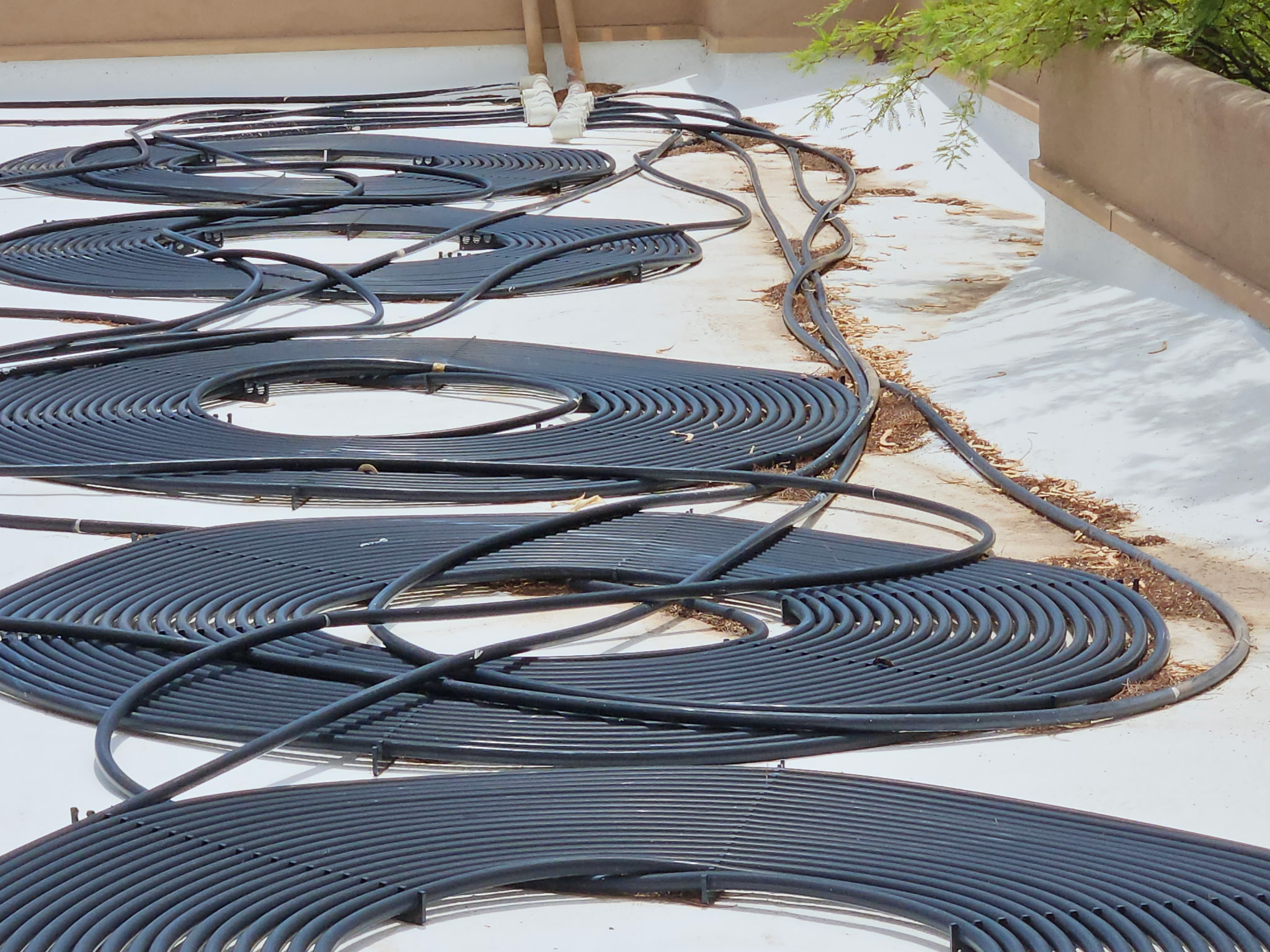
What began as routine roof maintenance became a long-term example of how rooftop pool-heating equipment can complicate the care and performance of a coated roofing system. MBM Roofing & Coating had maintained this residential roof on a six-month maintenance schedule, giving technicians regular opportunities to monitor its condition and identify developing concerns associated with the extensive pool-heating coil system installed across portions of the roof.
Over several years, the interaction between the rooftop equipment, associated plumbing, and the roofing system created recurring maintenance challenges that required more than one intervention. Through ongoing inspections, roof repairs, and recoating, MBM worked with the homeowner to manage these conditions until a long-term decision was ultimately made to eliminate the source of the recurring problem and restore the roof as a fully accessible, unobstructed surface.


The Process
Roof Repair and Recoating After Pool Heating Coil Damage
Coils Removed, Roof Repaired & System Reinstalled
During the initial coating project, MBM Roofing & Coating had to remove the extensive rooftop pool-heating coil system to properly access the roof beneath it. Once the coils were out of the way, technicians could address the roof surface and complete the required coating work.
MBM reviewed the issues associated with the pool-heating coils with the homeowner during this work. After the necessary roof repairs and coating were completed, the coils were reinstalled and the system remained in use.
Because the equipment covered such a large portion of the roof, future comprehensive roof work would involve additional labor before roofing work could even begin. The system first had to be moved so technicians could reach the coated surface underneath.
MBM Continues Monitoring the Roof & Pool-Heater System
MBM continued inspecting and maintaining the roof approximately every six months. These recurring visits allowed technicians to monitor the coated roof as well as conditions developing around the rooftop pool-heating equipment.
The pool-heater plumbing was prone to leaking, and when leaks were found during maintenance visits, MBM made the homeowner aware of the issue. The staining visible around portions of the plumbing documented areas where water from the system had repeatedly reached the roof surface.
Pool-heater problems did not necessarily wait for the next major roofing project to appear. The six-month maintenance schedule gave usbrecurring opportunities to identify problems and make the homeowner aware when attention was needed.
What the Six-Month Inspections Revealed About How the Roof Coils Were Affecting The Roof
Regular inspections allowed MBM to track changes in the coated roof around the extensive pool-heating system as conditions developed over time.
Maintenance visits revealed recurring leaks in the pool-heater plumbing. When these issues were found, MBM made the homeowner aware of them.
Staining around portions of the plumbing showed where leaking water from the pool-heating system had repeatedly reached the roof surface.
Coil Damage Requires Another Major Roof Intervention
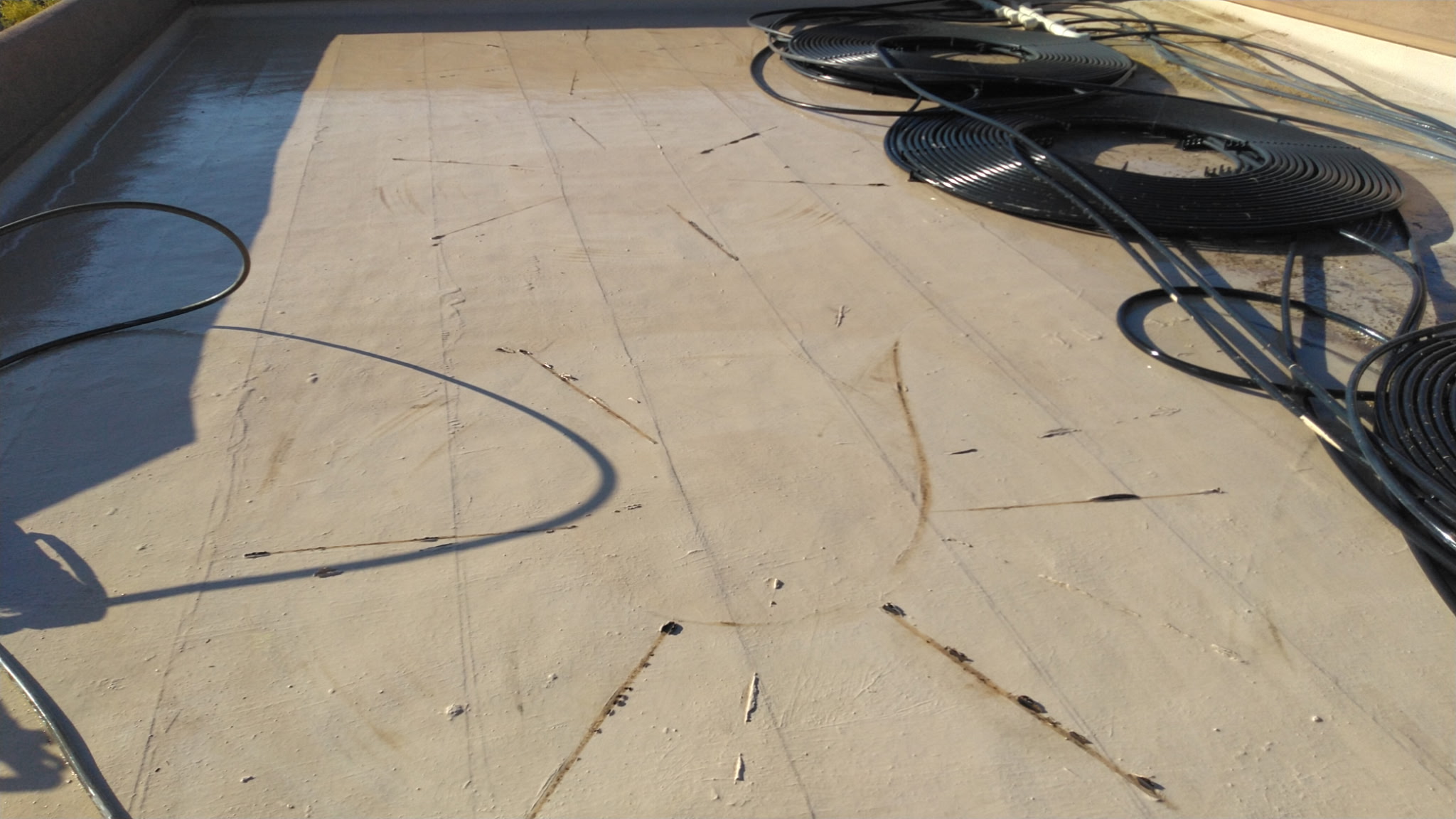
Over time, movement from the pool-heating system continued to affect the coated roof. Slight vibration allowed portions of the coils to repeatedly contact and cut into the surface, contributing to additional wear, cracking, and splitting beneath the equipment.
Within roughly two years, significant roof work was required again. As with the earlier project, the coils had to be removed so MBM could expose the affected areas, determine the extent of the damage, and complete the necessary repairs.
The frequency became an important part of the homeowner’s decision. The roof had already required substantial work again because of conditions associated with the pool-heating system.
Repeated Roof Damage Leads to Permanent Coil Removal
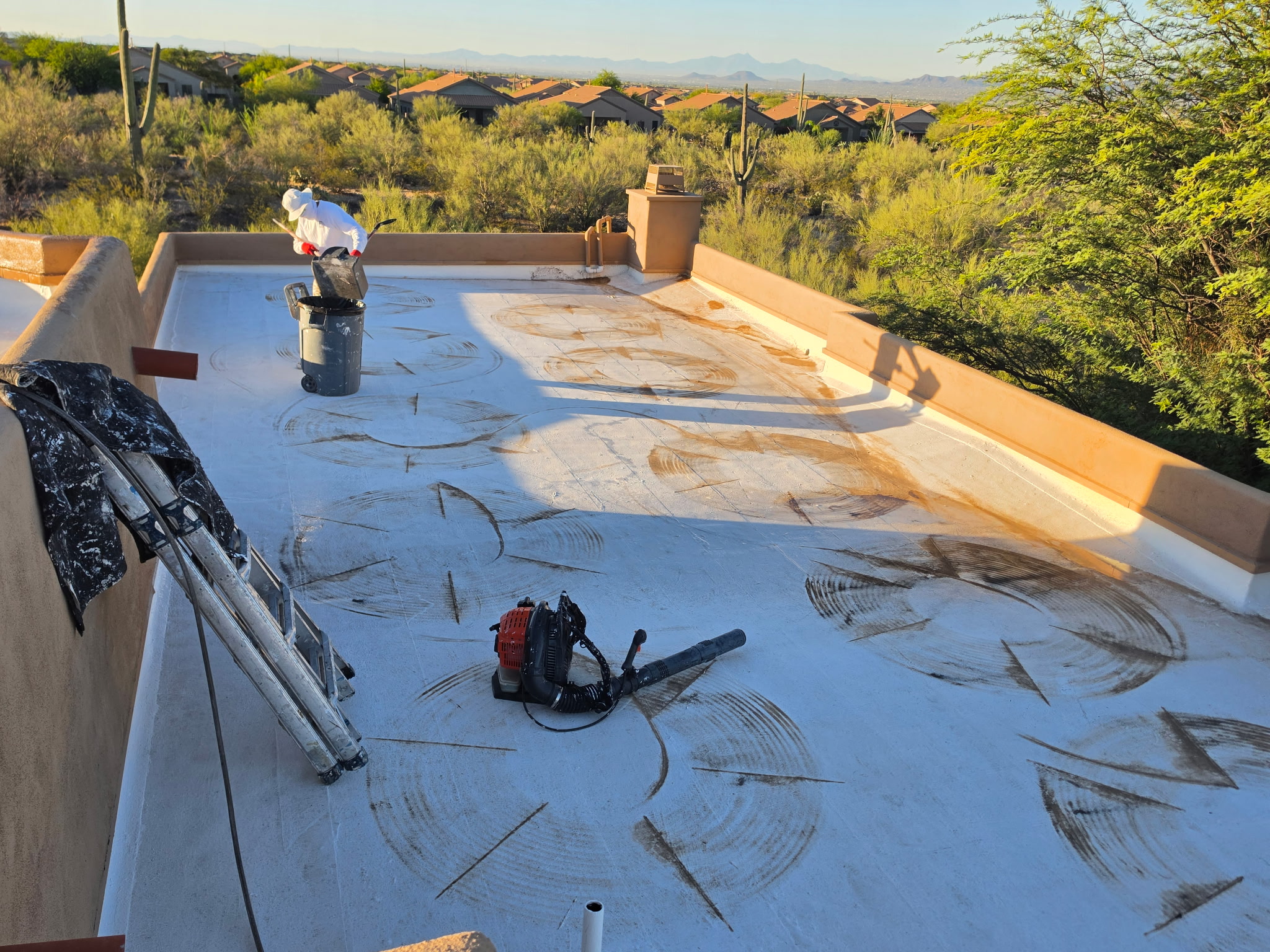
After requiring major roof work twice within approximately two years, the homeowner decided that continuing to reinstall the pool-heating system no longer made sense. The coils were contributing to recurring physical damage through vibration and repeated contact, while the associated plumbing also created ongoing leak concerns.
Keeping the system would also mean continuing to pay for the extensive coils to be removed and reinstalled whenever comprehensive repairs or a future recoat were needed. The homeowner instead chose to eliminate the system altogether. The pool-heater pipes were cut and capped, the coils were permanently removed, and they were not returned to the roof.
The Coils Increased Roof Maintenance Costs in Multiple Ways
The expense was not limited to repairing the roof damage itself. Keeping the pool-heating system created several recurring costs and maintenance challenges.
Vibration and repeated contact could cut into the coated roof, contributing to cracking, splitting, and additional repairs.
Leaks from the pool-heater plumbing repeatedly introduced water onto the roof and required continued monitoring.
Future recoating meant paying to remove the extensive system, complete the roofing work, and then reinstall the equipment.
MBM has worked with approximately seven other clients with similar rooftop pool-heating systems who ultimately chose permanent removal because the recurring damage and cost of removing and reinstalling the equipment made continued use increasingly expensive.
Roof Repaired, Prepared & Recoated
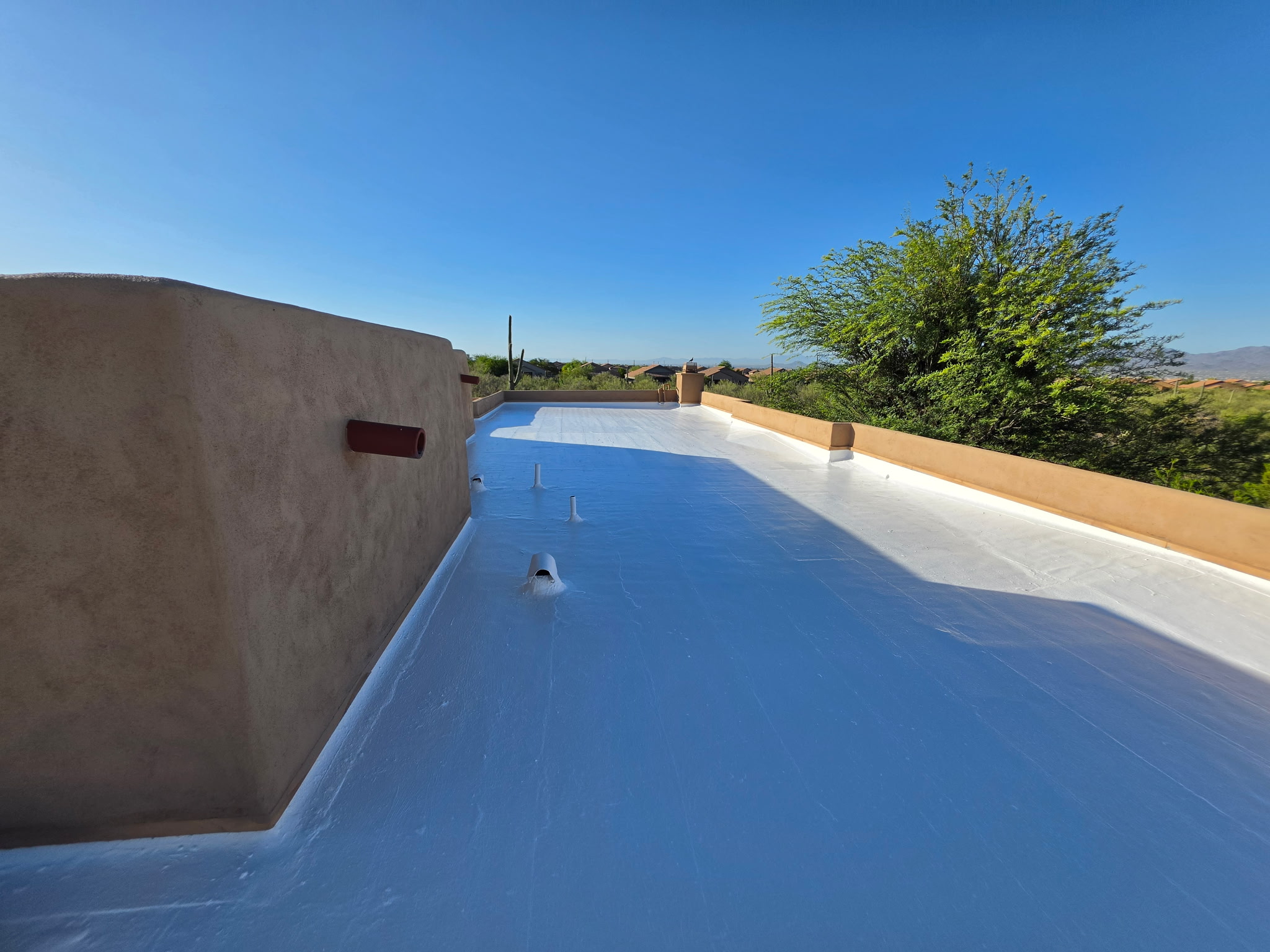
Once the final equipment removal was complete, MBM’s focus shifted to restoring the roofing system. Damaged and previously covered areas were repaired, the surface was prepared, and the roof received a new white protective coating.
The completed project left a continuous coated roof surface with clear visibility across areas that had previously been covered by the pool-heating equipment.
Improved Access for Future Roof Care
Six-month inspections can now include direct visual access across the previously covered roof surface.
Routine cleaning is easier without coils and plumbing covering large portions of the roof.
Future repair and recoating work can begin without first removing an extensive rooftop pool-heating system.
Cause of Damage
Understanding How Pool Heating Coils Can Damage a Roof
Vibration & Repeated Contact
Slight vibration caused the coils to wear against the coated roof surface, leaving cuts and cracking beneath the system.
Leaking Pool-Heater Plumbing
When leaks developed in the rooftop plumbing, water could continue running across the roof until the issue was identified.
Hidden Damage & Limited Access
The coils covered large areas of the roof, making underlying damage harder to inspect, access, and properly repair.
Debris Accumulation & Prolonged Moisture
Leaves and debris collected beneath the coils, trapping moisture and making routine roof maintenance more difficult.