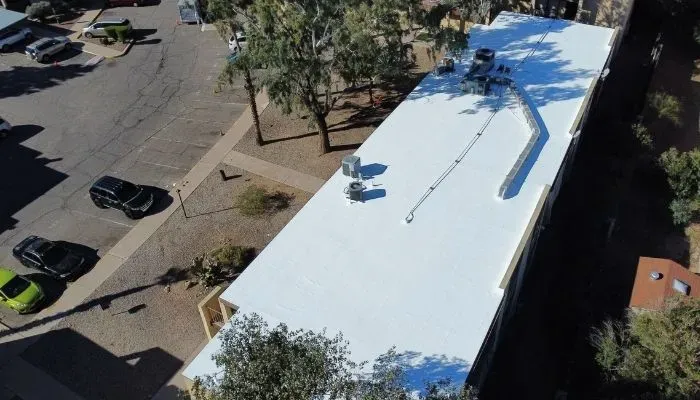
Roof coatings often peel when applied over existing silicone roof coatings because silicone creates one of the most difficult roofing surfaces for new coatings to bond to long term.
Many building owners are told that a roof can simply be cleaned and recoated when it begins showing signs of age. While that may be true for some roofing systems, silicone coatings can create a very different situation. Once silicone has cured, its surface characteristics make it challenging for many coating products to achieve a reliable bond. Even when a new coating initially appears successful, adhesion problems can develop years later as the roof expands, contracts, and weathers.
Understanding why this happens can help property owners make better decisions before investing in another coating project.
How Silicone Roof Coatings Differ From Other Roof Coatings
Silicone roof coatings are designed to create a waterproof membrane over an existing roof surface. One of their primary advantages is resistance to ultraviolet exposure and standing water.
Unlike some coating materials that become brittle after years of sun exposure, silicone generally remains flexible and weather resistant. This durability is one reason silicone became popular in certain roofing applications.
However, the same properties that help silicone resist weathering can create problems during future restoration projects. Once cured, silicone naturally resists adhesion. In simple terms, many products do not like sticking to it.
That becomes a major concern when the roof reaches the point where restoration or recoating is needed.
Why New Coatings Struggle to Bond to Silicone
Most roof coatings depend on adhesion to perform properly.
When a new coating is installed, it must form a strong bond to the surface below. If that bond is weak, the coating may eventually separate from the roof system.
Silicone creates challenges for both mechanical and chemical adhesion. Even after cleaning, pressure washing, and surface preparation, the existing silicone remains a difficult substrate for many products.
The roof may look excellent immediately after completion. In some cases, the coating performs well for months or even years. The problem is that weak adhesion often reveals itself slowly.
As the roof experiences daily temperature changes, the bond between the new coating and the silicone surface is repeatedly stressed. Eventually, lifting, peeling, bubbling, or widespread coating separation can occur.
The failure is often not the new coating itself. The failure occurs at the bond line between the new coating and the existing silicone.
Why This Creates a Long-Term Problem for Building Owners
The challenge is not simply that silicone can be difficult to recoat.
The bigger issue is that future restoration options become more limited.
With many traditional coating systems, a contractor can clean the roof, repair damaged areas, and install a new coating system when the existing coating reaches the end of its service life.
Silicone roofs often require additional preparation, specialized products, adhesion testing, and careful evaluation before another coating can be installed. Even then, the success of the project still depends on maintaining a reliable bond to the existing silicone surface.
This is why many building owners are surprised when they discover that restoring a silicone roof can be more complicated and expensive than expected.
Surface Contamination Makes Adhesion More Difficult
Roofs collect contamination throughout their service life.
Dust, dirt, pollen, pollution, oils, and other airborne contaminants gradually accumulate on the roof surface. In Arizona, dust alone can become a significant issue.
Although pressure washing removes much of this contamination, achieving a perfectly clean surface can be difficult. Even small amounts of residue may interfere with adhesion.
Because of this, manufacturers often require extensive cleaning procedures, adhesion testing, and specific preparation methods before approving a coating application over existing silicone.
Proper preparation is critical, but preparation alone does not change the underlying characteristics of silicone.
Can Abrasion Solve the Problem?
Some contractors attempt to improve adhesion by mechanically abrading the silicone surface.
The goal is to roughen the roof and create additional profile for the new coating to grip. While this process can improve adhesion in some situations, it is not always a complete solution.
The effectiveness depends on factors such as roof age, contamination levels, coating condition, weather exposure, and product compatibility.
Large commercial roofs can also be difficult to abrade consistently. Areas that receive less preparation may become future failure points.
For this reason, abrasion is generally viewed as one part of the preparation process rather than a guaranteed solution.
Why Roof Movement Exposes Adhesion Problems
All roofs move.
In Arizona, roof surfaces regularly experience extreme temperature swings. During the day, roof temperatures can become exceptionally hot. At night, temperatures drop significantly.
This daily cycle causes roofing materials to expand and contract.
When adhesion is strong, the coating system moves with the roof. When adhesion is weak, those movements place stress on the bond line between materials.
Over time, repeated movement can cause the new coating to separate from the silicone beneath it.
This is why some recoated silicone roofs appear successful at first but begin showing peeling or lifting years later.
Are Primers a Permanent Solution?
Primers are frequently used when coating over silicone roofs.
These products are designed to improve adhesion between the existing silicone and the new coating system. In some situations, primers can improve performance significantly.
However, primers do not eliminate the underlying challenge.
The roof still depends on maintaining a bond to the existing silicone surface. Surface contamination, improper preparation, compatibility issues, environmental conditions, and installation variables can all influence long-term performance.
This is why experienced contractors often perform adhesion testing before recommending a coating-over-silicone restoration project.
Testing helps determine whether the proposed system is likely to perform as intended on that specific roof.
What Peeling Usually Looks Like
Peeling rarely appears all at once. In many cases, building owners first notice lifting edges around seams, drains, penetrations, or other areas where movement and stress are concentrated.
Small blisters may develop. Sections of coating can begin separating from the underlying silicone. As the problem spreads, larger portions of the roof may lose adhesion.
Once widespread peeling develops, spot repairs are often no longer the most effective solution.
At that stage, building owners typically need to evaluate larger restoration options.
Alternatives to Recoating Over Silicone
When a silicone roof begins showing signs of failure, building owners generally have three options.
The first option is to attempt another coating application over the existing silicone using extensive preparation, adhesion testing, primers, and compatible products.
The second option is complete roof replacement. While replacement provides a new roofing system, it is often the most expensive solution available.
The third option is to install a restoration system that creates a separation layer between the existing silicone surface and the new waterproofing system.
At MBM Roofing & Coating, this is often accomplished using our Membrane Fiberglass System. Rather than relying entirely on direct adhesion to the existing silicone surface, the fiberglass reinforcement creates a new layer that can help address many of the challenges associated with aging silicone roofs.
The best solution depends on the condition of the roof, the extent of existing failures, and the owner’s long-term goals.
Evaluating a Silicone Roof Before Making Repairs
Not every silicone roof should be treated the same way. Before recommending any restoration strategy, the roof should be inspected for adhesion issues, trapped moisture, structural concerns, contamination, existing coating thickness, cracking, and overall condition.
A roof that appears acceptable from the ground may have underlying conditions that affect the success of future repairs or restoration work. Proper evaluation helps determine whether recoating, restoration, or replacement is the most appropriate path forward.
Conclusion
Roof coatings peel when recoated over existing silicone roof coatings because silicone creates one of the most difficult surfaces for new materials to bond to reliably over the long term. While cleaning, abrasion, primers, and adhesion testing can improve adhesion, they do not eliminate the underlying challenges associated with cured silicone.
If your silicone roof is showing signs of peeling, lifting, bubbling, or coating failure, it is important to have the roof evaluated before investing in another coating application. The right solution depends on the condition of the roof, the extent of the existing damage, and your long-term goals for the property.
At MBM Roofing & Coating, we help property owners evaluate aging silicone roofs and understand all available restoration options. In many cases, our Membrane Fiberglass System can provide an alternative to repeated recoating attempts or the expense of a full roof replacement. If you’re experiencing problems with a silicone roof, contact MBM Roofing & Coating to schedule an inspection and learn which restoration option is best suited for your roof.
Frequently Asked Questions
Can a silicone roof be recoated?
Technically, some contractors attempt to recoat silicone roofs using specialized primers and preparation methods. However, silicone is one of the most difficult roofing surfaces for new coatings to bond to reliably over the long term. Because adhesion failures can occur years after installation, many building owners experience peeling, lifting, or coating separation after a recoat.
At MBM Roofing & Coating, we do not simply apply another coating over an existing silicone roof. Instead, we inspect the roof and discuss whether our Membrane Fiberglass System may be a suitable restoration solution for the specific condition of the roof. Factors such as the extent of coating failure, moisture intrusion, structural condition, and the overall integrity of the roof all play a role in determining whether the system is a good fit.
Why is silicone difficult to coat over?
Silicone naturally resists adhesion. While this property helps silicone resist weathering and moisture, it also creates challenges when another coating is applied over it. Even after cleaning and surface preparation, many coatings struggle to achieve a long-term bond to cured silicone.
This is one of the primary reasons silicone roofs can develop peeling or adhesion-related failures when they are recoated.
Does pressure washing solve silicone adhesion problems?
No. Pressure washing is an important part of roof preparation because it removes dirt, dust, and surface contaminants, but it does not change the characteristics of cured silicone.
Even a clean silicone roof can still present adhesion challenges for new coatings. That is why the condition of the roof and the restoration approach should be carefully evaluated before any work begins.
What are the signs that a silicone roof recoat is failing?
Common warning signs include peeling coating, lifting edges, bubbling, blistering, and sections of coating separating from the surface below. These problems often begin around seams, penetrations, drains, or areas exposed to significant movement and weathering.
If you notice any of these conditions, it is important to have the roof inspected before the problem worsens and exposes additional areas of the roof system.
What options do I have if my silicone roof is failing?
Many property owners assume their only option is a complete roof replacement. Depending on the condition of the roof, that may not be necessary.
At MBM Roofing & Coating, we often recommend our Membrane Fiberglass System for roofs with existing silicone coatings. Rather than relying on a new coating to bond directly to the silicone surface, the system creates a separation layer that helps overcome the adhesion challenges associated with silicone roofs.
The best solution depends on the condition of the roof, which is why a professional inspection is always recommended.
Do I need a roof replacement if my silicone roof is peeling?
Not necessarily. While some roofs may require replacement, others may qualify for restoration solutions that can extend the life of the existing roof.
The only way to know which option is appropriate is through a thorough roof inspection. Factors such as moisture intrusion, structural condition, coating failure, and overall roof condition all influence the recommendation. At MBM Roofing & Coating, we help property owners understand all available options before making a decision.
Why does MBM Roofing & Coating use a Membrane Fiberglass System on silicone roofs?
Silicone roofs present unique restoration challenges because many coatings struggle to achieve reliable long-term adhesion to cured silicone. Our Membrane Fiberglass System is designed to create a reinforced separation barrier between the existing silicone roof and the new waterproofing system.
This approach allows us to restore many silicone roofs without relying solely on direct coating-to-silicone adhesion and without immediately resorting to a full roof replacement.