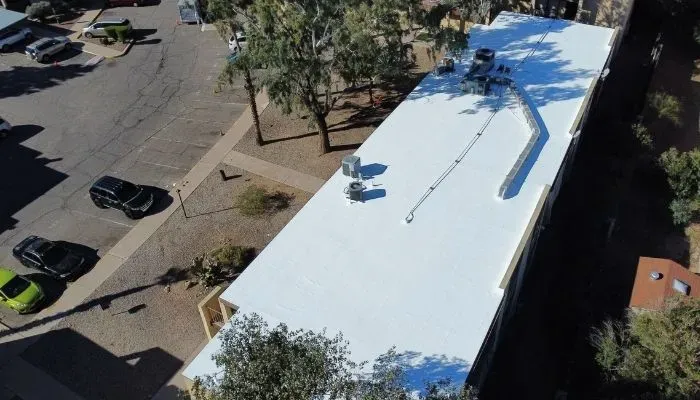
A roof does not have to be perfect before it can be recoated, but anything that is already failing, leaking, separating, cracking, or otherwise causing trouble needs to be dealt with first. Sometimes that means repairing a few isolated areas and moving on with the coating process. Other times, we get on a roof and find that the problems are spread out enough, or have been repaired enough times already, that a restoration system makes more sense before the new coating goes on.
That distinction matters in Tucson. Coated roofs here spend year after year dealing with intense sun, high surface temperatures, monsoon storms, dust, debris, rooftop equipment, occasional tree branches that have apparently decided they also own the roof, and the normal expansion and contraction that happens as everything heats up during the day and cools back down at night.
At MBM Roofing & Coating, we specialize in coated roofing systems, so part of our job is figuring out what the roof needs before it is ready for another coat. A standard recoat may be all that is needed. There may be a handful of repairs to complete first. Or the roof may still have plenty of usable life left but need a more reinforced restoration approach before coating.
The point is to preserve the roof when it makes sense to preserve it, not to do more work than necessary, but also not to put fresh coating over a problem and hope for the best.
What Do We Look at Before Recoating a Roof?
We look at much more than whether the roof still looks white.
A coating can be faded, dirty, or weathered and still be sitting over a roof that is otherwise in good condition. On the other hand, a roof can look fairly normal from the ground while having several problem areas around penetrations, drains, equipment, parapets, or previous repairs.
Before recommending a standard recoat, we look at things such as:
- The overall condition of the existing coating
- Areas where the coating has become thin or worn
- Cracks and recurring crack patterns
- Seams and transitions
- Flashing
- Pipes, vents, skylights, and other penetrations
- Parapet walls
- Scuppers, drains, and low areas
- Signs of ponding or slow drainage
- Blisters and raised areas
- Previous repairs
- Soft or deteriorated sections
- HVAC equipment and equipment curbs
- Plumbing or condensate lines
- Areas that receive regular foot traffic
- Tree contact and debris buildup
- Damage caused by other work performed on the roof
Some of these things are minor. Some are not. More importantly, the same symptom can mean different things on different roofs.
A crack beside one penetration is different from cracks running across half the roof. One small blister is different from a roof covered with them. A little water sitting for a short time after a monsoon is different from the exact same low spot holding water again and again.
That is why roof condition matters more than simply saying, “It has been five years, so it must be time to coat it.”
Some Roofs Only Need Minor Repairs Before Recoating
A lot of coated roofs we inspect do not need anything dramatic.They may have a few problem areas that should be repaired, but the roof as a whole is still in good shape. Once those areas are properly addressed and the roof is cleaned and prepared, the normal recoating process can continue.
Localized Cracks
A small, isolated crack can often be repaired before the roof is recoated. What matters is where the crack is, how large it is, what the surrounding roofing material looks like, and whether it appears to be an isolated defect or part of a bigger pattern. If we find one or two limited cracks and the rest of the roof is performing well, that is very different from seeing cracking scattered across large sections of the surface.
Worn or Thin Coating
Normal coating wear is exactly the kind of condition routine recoating is meant to address. Roof coating gradually loses material as it spends years exposed to Tucson’s sun and weather. It may become thinner, less reflective, and less flexible over time. If the existing coating is still properly bonded and the roof beneath it is sound, renewing that protective layer can help keep the roofing system in service rather than allowing normal weathering to progress into larger problems.
This is one reason we generally talk about recoating on roughly a 4–6 year cycle in Southern Arizona—but “roughly” matters. A roof underneath mature trees, a roof loaded with equipment, and a wide-open roof with almost nothing around it can all age differently.
Penetrations Are Small Areas That Can Cause Big Problems
Pipes, vents, skylights, HVAC curbs, electrical penetrations, and similar details are some of the first places we pay attention to. A large open section of roof is relatively simple. A penetration is where different materials meet, move, expand, contract, get serviced, get bumped, get resealed, and occasionally get treated with whatever tube of sealant someone happened to have in the truck that day.
That does not mean every penetration is a problem, but it does mean they deserve a closer look. If the issue is limited to one penetration or the flashing around it, that area may be repaired before the roof is recoated. Once the detail is sound, the coating can become the final protective surface over it.
Previous Repairs Tell Us a Lot
One of the first things we notice on older coated roofs is repair history. A previous repair is not automatically bad. Roofs need maintenance. Things happen. What becomes important is whether the same area has been repaired several times and continues to fail. If we see a patch, then another patch over that patch, then another repair beside both of them, that is useful information.
At some point, repeatedly treating the symptom becomes less effective than addressing the larger condition underneath it. This is one of the situations where a restoration system may become a better option than continuing with isolated repairs.
When Does a Roof Need More Than Spot Repairs?
Spot repairs usually stop making sense when the problems are widespread, recurring, or connected to a larger condition across the roof.
For example, we may become more concerned when we see:
- Cracking across multiple roof areas
- Repeated repairs that keep reopening
- Several leak locations
- Large sections of deteriorated coating or roofing material
- Consistent movement across seams or transitions
- Recurring water-related damage
- Multiple weak areas rather than one isolated defect
- Damage that requires broader reinforcement
- Repairs that have already been attempted several times without lasting results
That does not automatically mean the roof needs to be replaced. This is an important distinction. A roof can need more than a standard recoat and still have plenty of usable life left. In those situations, restoration gives us another option between “patch it again” and “tear the whole roof off.”
What Is the Difference Between Roof Repair and Roof Restoration?
Roof repair generally addresses a limited problem, while roof restoration addresses a broader condition before the roof is coated. A repair might involve one crack, a penetration, flashing, a deteriorated section, or another defined problem area.
Restoration is more comprehensive. It may involve reinforcement, additional repair work, or treatment across a larger portion of the roof so the existing system is brought back to a condition where the final coating can perform properly.
In practical terms, a roof with two damaged areas may need repairs. A roof with cracking and recurring problems across several areas may need restoration. There is no magic number where one suddenly becomes the other. We look at the pattern, the cause, the history of the roof, and how the surrounding material is holding up.
Can You Recoat a Roof That Is Leaking?
Yes, some leaking roofs can still be recoated, but the leak needs to be found and corrected first. A small leak around a pipe or flashing detail may only require a localized repair before coating. A roof that leaks in several places every monsoon is telling us something different.
Water also has an annoying habit of appearing inside a building somewhere other than directly below where it entered. It can travel along framing, decking, insulation, or other materials before finally showing itself on a ceiling. That is why we do not simply look at the wet spot inside, walk directly above it, smear coating on the roof, and call the mystery solved.
We look at the surrounding roof, nearby penetrations, seams, equipment, drainage areas, previous repairs, and other possible entry points. Once the cause has been addressed, the roof can be prepared for coating if the rest of the system remains a good candidate.
Ponding Water Needs a Closer Look
Coating does not fix the reason water repeatedly collects in a low area. Tucson is dry much of the year, which can make drainage problems easy to ignore until monsoon season arrives and suddenly that low spot becomes a small temporary pond. A little water immediately after a heavy storm is one thing. Water that consistently remains in the same area is something we want to investigate.
We look at how the roof drains, whether the area has deteriorated, how long moisture tends to remain there, and whether previous repairs have already been attempted.
If water-related conditions are significant enough, we may recommend our Last Bond Roofing System rather than treating the area as a routine recoat.
Where Last Bond Can Fit Into the Process
The Last Bond Roofing System may be used when a qualifying roof has water-related conditions or problem drainage areas that need a more reinforced approach before coating. This can be useful when certain roof areas have been exposed to recurring moisture or need additional waterproofing support beyond what we would expect from a normal recoat.
The purpose is not to throw a specialized system at every puddle we see. We first need to understand why the water is there, how the surrounding roof has been affected, and whether the existing roof is still a good restoration candidate. When it is, Last Bond gives us a way to strengthen vulnerable areas and improve waterproofing performance before the final protective coating is applied.
Learn More About the Last Bond Roofing System
Widespread Cracking Is a Different Problem Than One Crack
A single crack can often be repaired. A roof with cracks running through multiple areas requires a different conversation. Widespread cracking may indicate movement or deterioration that spot repairs alone are not going to solve very well.
We also look closely at whether cracks are new or whether the same areas have been repaired before. If we see evidence that a repair keeps reopening, we have to ask why. Sometimes the roof needs more reinforcement than another patch can provide.
For qualifying roofs with more extensive cracking, movement, or recurring repair areas, MBM may recommend the Membrane Fiberglass System.
When We Use the Membrane Fiberglass System
The Membrane Fiberglass System is designed to provide additional reinforcement where a qualifying roof needs more support than standard coating alone can provide. This may include roofs with more extensive cracking, repeated movement, recurring repair areas, or other conditions where reinforcing the roofing surface makes more sense than continuing to repair individual spots.
The fiberglass component helps create a stronger, more stable surface before the final coating is installed. We also use the Membrane Fiberglass approach for qualifying shingle-to-coated roof conversions, although that is a different process from restoring an existing coated roof.
Learn More About the Membrane Fiberglass System
Rooftop Equipment Can Be Harder on a Roof Than People Realize
Not every roof problem starts with the roof.
We regularly look around:
- HVAC units
- Pipes
- Condensate lines
- Solar equipment
- Vents
- Electrical components
- Pool-heating equipment
- Equipment supports
- Areas where technicians regularly walk
Rooftop equipment can leak. Pipes can leak. Equipment can vibrate. Components can rub against the roofing surface. Leaves and debris can collect underneath things that make the area difficult to clean. And then there is service work.
Someone may install, remove, repair, drag, reposition, or temporarily set equipment on the roof without realizing what it is doing to the coating underneath. That is why we inspect the roofing around rooftop equipment rather than treating the open field of the roof as the whole story.
We have seen roofs where the coating away from the equipment was still performing while repeated equipment-related issues caused very concentrated damage in one area.
Cleaning the Roof Is Part of the Inspection Process Too
A roof needs to be clean before coating, but cleaning also gives us a better look at what is actually there. Dust, dirt, loose material, leaves, and old surface debris can hide small cracks or deteriorated areas until the roof is cleaned. This is one reason pressure washing and surface preparation happen before we start applying new coating.
Once the roof is clean, we can deal with the repairs that become visible and make sure the new material is being applied over a properly prepared surface. A good coating product cannot make up for poor preparation. You can buy excellent paint and put it over a dirty wall and still get a bad paint job. Roofing materials are obviously more technical than painting a wall, but the basic principle is surprisingly similar: what you put material over matters.
Why We Apply Two Coats After the Roof Is Ready
Once the repairs or restoration work are complete, the coating itself still has to be applied correctly. MBM uses a two-coat application process to build proper coverage and finished coating thickness to 32 mil.
The first layer establishes coverage over the prepared roof. Then it needs time to cure properly. After that, we apply the second layer to build additional material and create a more consistent finished surface. That thickness matters in Tucson.
A roof should not simply look white when we leave. The coating needs enough material to do its job because after the recoating the roof will immediately go back to dealing with intense sunlight, high daytime temperatures, nighttime cooling, wind, dust, and monsoon weather.
Small Roof Problems Are Usually Cheaper When They Stay Small
This sounds obvious, but it is worth saying because roofs are very easy to forget about when they are not actively leaking into the living room. A branch rubs against one corner. Leaves collect around a drain. A condensate line starts dripping where it did not used to. Someone services an HVAC unit and damages a small area. None of these things necessarily feels urgent at first. Give them enough time, though, and a minor maintenance issue can become a repair project.
Regular roof inspections give us a chance to catch those problems before they spread. MBM offers maintenance schedules as often as every 3 months, 6 months, or 12 months depending on the property.
A heavily wooded property or a roof with a lot of equipment may benefit from more frequent attention. A cleaner, simpler roof may not need us up there nearly as often. There is no prize for inspecting a roof more often than it needs, but there is also no prize for discovering a clogged drainage area during the first major monsoon of the year.
Can Repairing and Recoating Save Money Compared With Roof Replacement?
Yes. When the existing roof is still worth preserving, repairing or restoring it and then recoating it can be much more cost-effective than replacing the entire roof prematurely.
Roof replacement involves much more than the new roofing material itself. There can be tear-off, disposal, labor, new materials, disruption to the property, and additional work depending on what is uncovered. If the existing roof still has usable life, maintaining it can allow the property owner to keep getting value from what is already there.
That does not mean coating is the answer to every roof. It means we should not throw away a roof that can still be responsibly preserved, just as we should not keep coating a roof that has reached a point where preservation no longer makes sense.
Why Tucson Property Owners Choose MBM Roofing & Coating
MBM Roofing & Coating has more than 20 years of experience working with coated roofing systems in Tucson, Arizona. Roof coating is not something we occasionally add onto other roofing work. It is our core specialty, along with the repairs, restoration systems, maintenance, and shingle conversions that support coated roofs throughout their service life.
We want customers to understand what we find on their roof and why we recommend a particular approach. Sometimes the good news is, “You just need a recoat.” Sometimes we find a handful of repairs. Sometimes we have a little (or a lot) more to talk about. Either way, our goal is to provide quality roof work that fits what the property actually needs at a fair price, with clear communication throughout the project.
That seems simple, but it is also exactly what our customers mention again and again in more than 70 five-star reviews: workmanship, communication, professionalism, reliability, attention to detail, and fair pricing.
Schedule a Roof Inspection in Tucson
If your coated roof is approaching its next maintenance cycle, has developed cracks or worn areas, has been leaking, or simply has not been inspected in a while, MBM Roofing & Coating can take a look and tell you what we find.
Call (520) 260-4707 or request a free estimate to schedule a roof inspection in Tucson.
Request a Free Roof Inspection & Estimate
Frequently Asked Questions About Roof Repairs Before Recoating
Does my roof have to be repaired before it is recoated?
Only if there are problems that need to be corrected first. A roof that is otherwise sound and simply has an aging coating may only need cleaning, normal preparation, and recoating. Cracks, damaged flashing, problem penetrations, blisters, deteriorated areas, or other defects may need repair before the coating process continues.
Can roof coating be applied over cracks?
Small cracks can often be repaired before coating, but new coating should not simply be used to cover an unresolved crack. We look at the size of the crack, where it is located, whether similar cracking appears elsewhere, and whether the surrounding roof is still sound. Widespread or recurring cracking may require a reinforced restoration system rather than individual spot repairs.
Can you recoat a roof that is leaking?
Yes, if the cause of the leak can be identified and properly repaired first. A leak around one penetration may be a straightforward repair. Repeated leaks in several areas can point to a broader roof condition. Once the source has been corrected and the surrounding roof is properly prepared, the roof may still be an excellent candidate for recoating.
Will putting more coating on a roof stop a leak?
Not reliably if the cause of the leak has not been addressed. Coating can become part of the finished waterproofing system, but it should not be treated like a bucket of liquid patch material that makes every roof problem disappear. The leaking area needs to be inspected, repaired or restored as necessary, and then properly coated.
Can a roof with ponding water be recoated?
It may be possible, but recurring ponding should be evaluated before recoating. Coating does not change the shape of the roof or automatically correct the reason water collects in one area. Depending on what we find, the roof may need repair, drainage-related work, or a reinforced restoration approach before the final coating is applied.
Does every cracked roof need a restoration system?
No. A few localized cracks may only need individual repairs before recoating. Restoration becomes more likely when cracking is widespread, keeps returning after previous repairs, or appears to be related to larger movement across the roofing system.
What is the difference between repairing and restoring a coated roof?
A repair usually addresses a limited problem, while restoration addresses a broader condition across part or all of a viable roof. Repair might mean correcting a damaged penetration or isolated crack. Restoration can involve reinforcement and more extensive corrective work before the final coating is installed.
How do you decide whether my roof needs repairs or restoration?
We decide based on what we find during the roof inspection and how widespread the problems are. We look at cracking, drainage, previous repairs, leaks, penetrations, roof movement, equipment areas, coating condition, and the condition of the surrounding roofing material. One isolated issue usually tells a different story than the same problem appearing repeatedly across the roof.
Is an old coated roof automatically a restoration job?
No. Roof age by itself does not determine whether restoration is necessary. We have to look at how the roof has been maintained, how the existing coating is holding up, whether repairs have been needed repeatedly, what the drainage looks like, and whether the underlying roofing system remains sound.
Do roof blisters have to be repaired before recoating?
Blisters should be inspected before recoating because we first need to know why they developed. One isolated blister may be a limited repair. Multiple blisters can sometimes point to trapped moisture, poor adhesion, or another larger condition underneath the coating. Covering them without understanding the cause can leave the actual problem in place.
Why are roof penetrations such a common problem area?
Roof penetrations are vulnerable because they are places where different materials, movement, flashing, and sealants all come together. Pipes, vents, skylights, HVAC equipment, and electrical components can all move differently than the surrounding roofing surface. They may also be disturbed when equipment is serviced, which is why we give those areas extra attention before recoating.
Can my air conditioner damage my roof coating?
Yes, rooftop HVAC equipment can contribute to coating damage even when the equipment itself is working normally. Condensate, plumbing leaks, service traffic, vibration, improperly supported components, or technicians moving around the equipment can all affect the roofing surface. We routinely inspect these areas when evaluating a roof.
How often should a coated roof in Tucson be inspected?
The best inspection schedule depends on what surrounds and sits on the roof. A roof with mature trees, frequent debris, several HVAC units, or a history of drainage issues may need closer attention than a simple roof with little vegetation nearby. MBM offers 3-month, 6-month, and 12-month maintenance options so the schedule can match the property instead of forcing every roof into the same plan.
How often should a roof in Tucson be recoated?
Many coated roofs in Southern Arizona are recoated about every 4–6 years, but the roof’s actual condition should determine the timing. Sun exposure, existing coating thickness, maintenance, trees, rooftop equipment, drainage, previous repairs, and other factors all affect how quickly a coating wears.
Why does MBM apply two coats?
We use two coating applications to build more consistent coverage and finished coating thickness across the roof. The first application establishes coverage over the properly prepared surface. After it has had appropriate time to cure, the second application builds additional material and completes the protective coating system.
Is repairing and recoating cheaper than replacing the roof?
In many cases, yes, especially when the existing roof still has useful service life left. Repairing isolated problem areas or restoring a viable roof before recoating can preserve roofing materials that are still performing and avoid the labor, materials, disposal, and disruption involved in premature replacement. The actual cost difference depends on what the roof needs, which is why inspection comes first.
How do I know whether my Tucson roof is ready for another coating?
The best way to know is to have the roof inspected rather than judging by age or appearance alone. If the coating is simply weathered and the roof beneath it is sound, standard recoating may be all that is needed. If we find cracks, leaks, drainage concerns, damaged penetrations, recurring repairs, or larger areas of deterioration, those issues may need to be addressed first.